
Why Is My Bathroom Fan Dripping Condensation? A Wasaga Beach Homeowner’s Guide
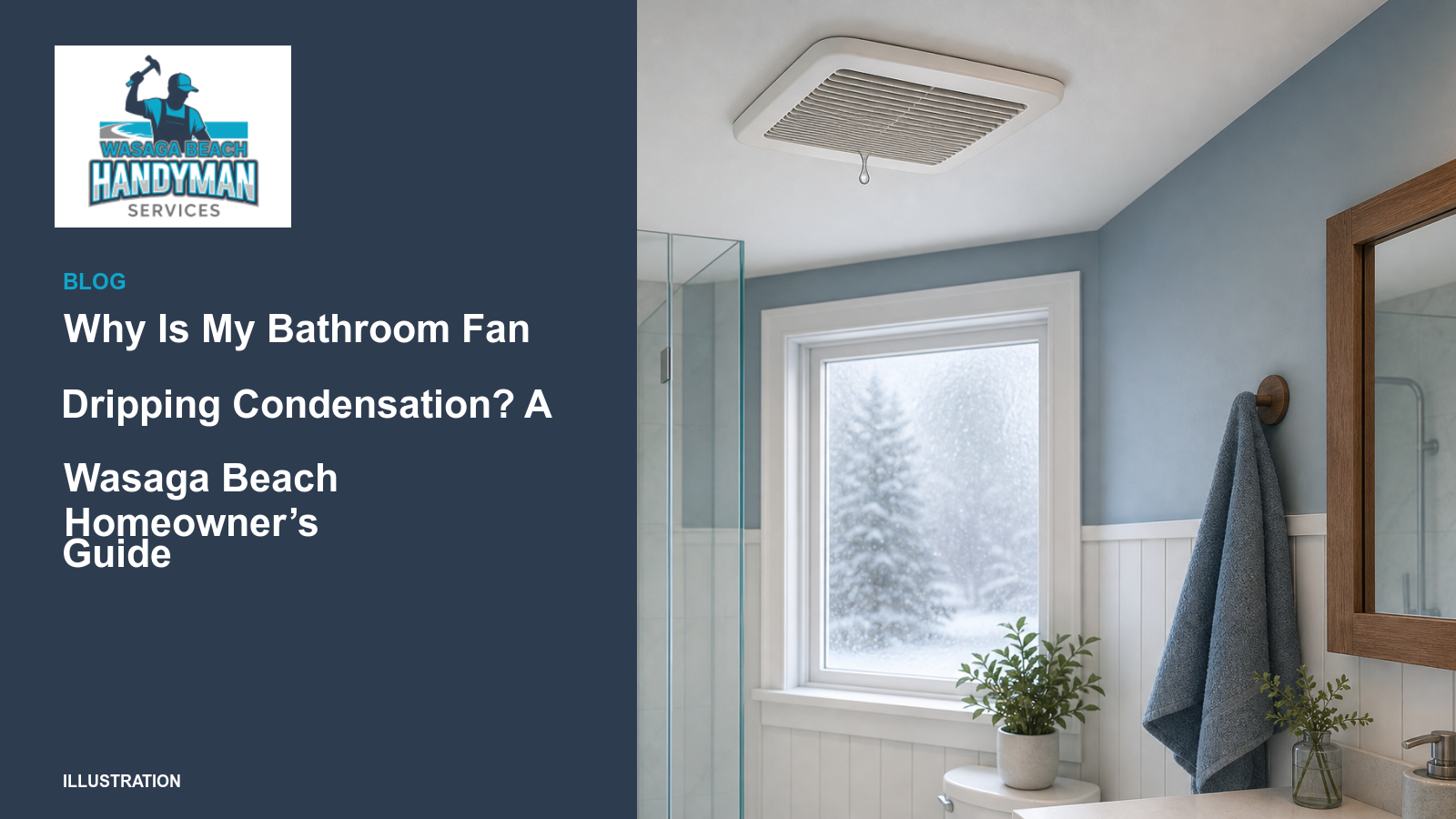
Usually, a bathroom fan drips because warm, humid air is condensing inside a cold duct or fan housing. But water at the grille can also point to rain entering through an exterior termination, a plumbing leak above the ceiling, poor airflow, or a duct that is not exhausting outdoors. The timing and location of the water are useful clues.
In cold weather, condensation is more likely when a duct has a cold uninsulated section, a low spot, a long horizontal run, or restricted airflow. Health Canada also identifies plumbing leaks, roof or exterior water entry and inadequate ventilation as possible sources of moisture in a home. Its bathroom guidance recommends adequate air movement, outdoor termination and running the fan for at least 30 minutes after a shower or bath. Read Health Canada’s moisture and mould guidance.
Start by identifying when the water appears
- During or shortly after a shower: condensation in the housing or duct is a reasonable first possibility, especially in winter.
- After rain or snowmelt: inspect the exterior termination and the area above the ceiling for possible water entry. A damaged cap, failed flashing or roof leak may be involved.
- Without using the shower: consider a plumbing leak, roof leak, condensation from another source or water travelling from elsewhere above the ceiling.
- With weak airflow: a dirty grille, blocked exterior damper, crushed or disconnected duct, or failing motor may be restricting ventilation.
- With staining, peeling paint or soft drywall: the ceiling may already be damaged. Repainting without finding the source can leave the problem unresolved.
If water is near an electrical fixture or the fan is visibly wet, stop using it. If it is safe to do so, turn off the affected circuit and arrange an assessment. Do not remove electrical components or climb onto a roof to investigate.
Why condensation runs back from the duct
Shower air contains more moisture than the surrounding room air. As that air moves through a cold duct, water can form on the inside surface and run back toward the fan. The risk increases when the duct sags, has an uninsulated section, is poorly routed, or cannot move enough air.
A powerful replacement fan is not automatically the answer. If the duct is undersized, damaged, disconnected or poorly terminated, a new motor may still be noisy or ineffective. The full route from the grille to the outside needs to be considered.
Safe checks you can make
1. Check basic airflow
Turn the fan on and hold a single sheet of toilet tissue near the grille. Some pull toward the grille suggests the fan is moving air, but this is only a basic check—not a measurement of capacity or code compliance. Little or no movement is a reason to investigate.
2. Clean the grille
Switch the fan off before removing or cleaning the grille. Vacuum dust from the visible cover and surrounding area. Follow the manufacturer’s instructions if the cover can be washed, and keep liquid away from the motor, wiring and housing.
3. Look at the exterior termination from a safe position
From ground level, check whether the wall or soffit vent appears blocked by leaves, lint, snow or an insect nest. If you cannot see it safely, leave the inspection to someone equipped to do it. Do not use an unstable ladder or walk on a roof.
4. Improve operation while the cause is being assessed
Run the fan during bathing and for at least 30 minutes afterward, as recommended by Health Canada. The room also needs a route for replacement air; if the fan is running but airflow remains poor, that may indicate a duct, damper or fan problem rather than simply a need for longer operation. Drying wet surfaces after use can reduce the moisture load but will not correct a leak or defective exhaust path.
When to request repair or replacement
A service call is sensible when dripping repeats, the fan is noisy or intermittent, airflow is weak, the exterior damper does not open, or the duct cannot be confirmed as an outdoor exhaust. Professional attention is also appropriate when there is staining, mould, peeling paint, soft drywall or a musty smell around the ceiling.
The likely scope depends on what is found:
- Cleaning: appropriate when dust is restricting the grille and the fan and duct otherwise appear to operate normally.
- Duct or damper correction: more likely when the fan runs but water returns, airflow is weak, or the exterior cap is blocked or damaged.
- Fan replacement: worth considering for an older, slow, noisy or failed unit, provided the existing duct route and termination are suitable.
- Moisture or ceiling repair: necessary when water has damaged drywall, insulation, framing or finishes.
- Broader bathroom work: reasonable when ventilation problems occur alongside deteriorated caulking, tile, fixtures or repeated moisture damage. See the company’s bathroom renovation services in Wasaga Beach.
Permit and electrical questions in Wasaga Beach
Permit requirements depend on the work. The Town of Wasaga Beach lists a new heating or ventilation system among work that may require a building permit. It also directs property owners to the Electrical Safety Authority for electrical permits and inspections. A like-for-like fan replacement may not be treated the same way as a new duct route, new wiring or a larger ventilation alteration, so confirm the project details before work begins.
Review the Town of Wasaga Beach building information and contact the Town or ESA when the scope is uncertain. Opening a ceiling, changing duct routes, altering plumbing or adding wiring can change the approvals that apply.
What to send with an estimate request
Photos and a short timeline can help separate a condensation problem from a leak investigation. Include:
- when the dripping started and whether it follows showers, rain or snowmelt;
- photos of the grille, ceiling and any staining or soft areas;
- whether the fan is noisy, slow, intermittent or unused;
- the approximate age of the fan, if known;
- the bathroom’s floor level and whether the home is seasonal;
- what you can see of the exterior termination; and
- whether you want a repair, a replacement assessment or a wider bathroom update.
For a seasonal property, describe whether the issue appeared after the cottage was reopened. A broader visit can be discussed through property maintenance in Wasaga Beach. Cottage owners can also ask about cottage opening services when ventilation or other systems need checking before regular use.
Do not ignore recurring drips
One drip after an unusually long shower may be a temporary condensation event, but repeated water, weak airflow or ceiling damage deserves closer attention. The practical next step is to document when it happens, perform only the safe checks above, and request an estimate that covers the complete exhaust path rather than only the fan grille.
To discuss bathroom fan repair, ventilation work or related moisture damage, call Wasaga Beach Handyman at 705-795-4009 or use the quote route on the Wasaga Beach Handyman website. Include photos and the timing of the dripping so the request can be scoped accurately.