
How to Winterize Outdoor Faucets in Wasaga Beach Before Freezing Weather
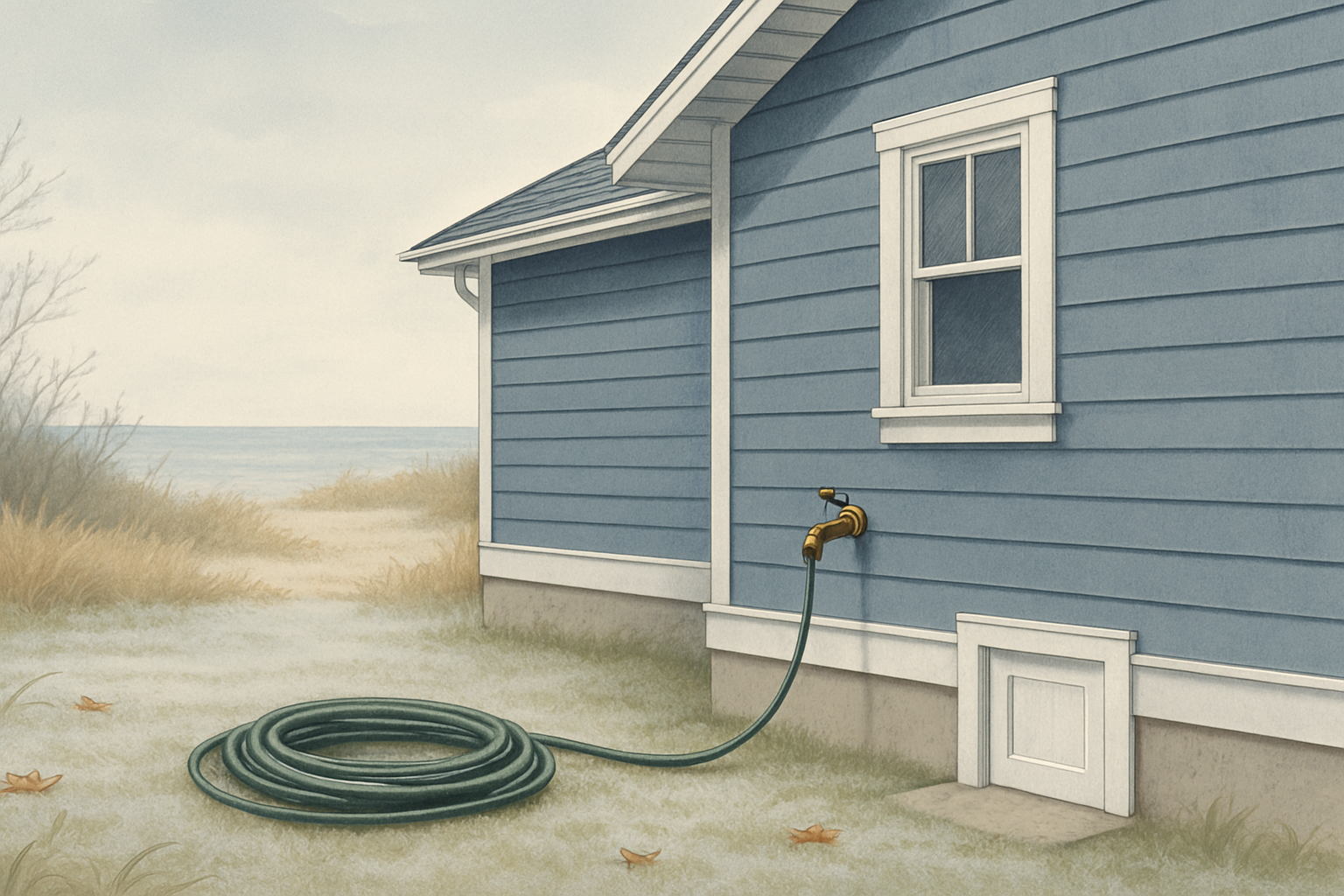
In most cases, winterizing an outdoor faucet starts with removing the hose and any attachments. If the faucet is not frost-proof, you also need to close the indoor shut-off and drain the exterior line. A connected hose, leaking valve, or trapped water can increase the risk of freeze damage when temperatures fall.
Canada Mortgage and Housing Corporation fall and winter maintenance guidance recommends storing outdoor hoses, closing the valve serving an outdoor hose connection, and draining the exterior faucet unless the home has frost-proof hose bibs.
First, identify the faucet arrangement
There are two common setups:
- Frost-proof or frost-free sillcock: The shut-off point is located farther inside the wall than the outdoor handle. When installed correctly and used without a connected hose, the exterior section is intended to drain when the faucet is closed.
- Conventional exterior faucet: Water may remain in the exposed section or connecting pipe unless a separate indoor shut-off and drain are provided.
Do not rely on appearance alone. Look inside the basement, crawlspace, utility area, or another accessible space near where the pipe enters the building. Some properties have separate shut-offs for different exterior faucets. If the line disappears into a finished wall, avoid cutting into the wall based only on a guess.
How to prepare a frost-proof faucet
- Disconnect the hose. Remove spray nozzles, timers, splitters, quick-connect fittings, and other attachments. A hose or closed accessory can prevent the faucet from draining as intended.
- Close the faucet normally. Let any remaining water run out. Do not leave an attachment connected to hold water against the outlet.
- Check for leaks. Dripping after the handle is closed, a handle that will not shut fully, or a damaged faucet body should be addressed before freezing weather.
- Inspect the wall entry. Look for loose mounting, visible gaps, damaged sealant, dampness, or cold air around the pipe. These signs do not identify the cause by themselves, but they justify further assessment.
A foam faucet cover may be a supplementary measure in some situations. It does not replace removing the hose or correcting a leaking, incorrectly installed, or inaccessible shut-off.
How to prepare a conventional outdoor faucet
If the faucet is not frost-proof, or you cannot confirm that it is, find the indoor valve serving that connection before the first sustained freeze.
- Remove the outdoor hose and all attachments.
- Close the indoor shut-off for the exterior faucet.
- Open the outdoor faucet to release pressure and allow the exposed section to drain.
- If the indoor valve has a drain or bleeder, place a container underneath and open it carefully.
- Close the drain after the line has emptied, following the valve design or manufacturer’s instructions.
- Leave the outdoor faucet in the position recommended for that fixture. If you cannot determine the correct position, ask a qualified plumbing professional rather than guessing.
Do not shut off the home’s main water supply merely because the exterior-faucet valve is hard to find. That may interrupt water service throughout the property without confirming that the outdoor line has drained.
If you cannot find the indoor shut-off
Trace the pipe from the exterior faucet from inside the building. Check accessible basement ceilings, mechanical areas, crawlspaces, and removable access panels. In a cottage or older home, the valve may be hidden behind a finished surface or may not exist.
If the line cannot be identified without opening a wall, get an assessment before doing demolition. A professional can help determine whether the issue is a missing valve, an inaccessible valve, a damaged faucet, or a pipe route that passes through an unheated area.
Wasaga Beach Handyman’s plumbing fixture installation service lists shut-off valve replacement and supply-line updates. The appropriate provider for a particular plumbing repair depends on the work involved. In Ontario, plumbing is a compulsory trade, so confirm that anyone undertaking regulated plumbing work is properly authorized or exempt under provincial requirements. See the Ontario compulsory-trades guidance for the current framework.
Warning signs before winter
Arrange an assessment before the property is left unattended if you notice:
- Water continues to drip after the faucet is closed.
- The handle is difficult to turn or will not shut completely.
- The faucet body, vacuum breaker, or surrounding fitting is cracked or damaged.
- There is dampness, staining, frost, or unusual cold around the pipe inside the wall.
- You cannot identify the shut-off for a conventional faucet.
- The line passes through an unheated garage, crawlspace, addition, or other exposed area.
- The same location has leaked or frozen in a previous winter.
Never use a torch or open flame to thaw a frozen pipe. Health Canada’s freezing-water guidance recommends hot air or steam for frozen water lines. If a well system has frozen, or you are unsure whether it is operating safely, contact a licensed well contractor or plumber.
Additional checks for a seasonal cottage
Include exterior faucets in the wider closing routine. Before leaving, confirm that:
- Every outdoor hose and attachment has been removed and stored indoors.
- Indoor shut-offs are labelled and accessible.
- Water lines in unheated areas are protected as appropriate for the property.
- Basement, crawlspace, and utility areas can be inspected if a problem is reported.
- Known leaks or repairs are recorded with photographs and notes.
- A trusted local contact knows where the water shut-offs are located.
For a broader property visit, review Wasaga Beach Handyman’s cottage-closing service. Confirm the exact scope and trade requirements before arranging work.
When to request help
Removing a hose may be enough for a properly installed frost-proof faucet in good condition. Request an assessment when the faucet leaks, the line is inaccessible, the shut-off cannot be identified, the pipe has frozen before, or the property will be vacant during winter.
When requesting an estimate, send photographs of the outdoor faucet, the interior pipe entry point if visible, any shut-off valves, and the surrounding wall or ceiling. Note whether the property is occupied, seasonal, or being closed for several months. For several unrelated repairs, the home repair service may be the more relevant starting point.
Quick Wasaga Beach faucet checklist
- Is the hose completely disconnected?
- Is the faucet frost-proof, or is there an indoor shut-off?
- Does the faucet drain normally?
- Is there dripping, cracking, dampness, or frost?
- Can someone reach the shut-off if the property is unattended?
- Have you recorded the condition before closing?
If you need help identifying the next step or want to request an estimate, use the Wasaga Beach Handyman contact page or call 705-795-4009. Describe the faucet type if known and include photographs so the scope can be assessed before a visit.