
Dryer Vent Cleaning in Wasaga Beach: Warning Signs and a Practical Maintenance Checklist
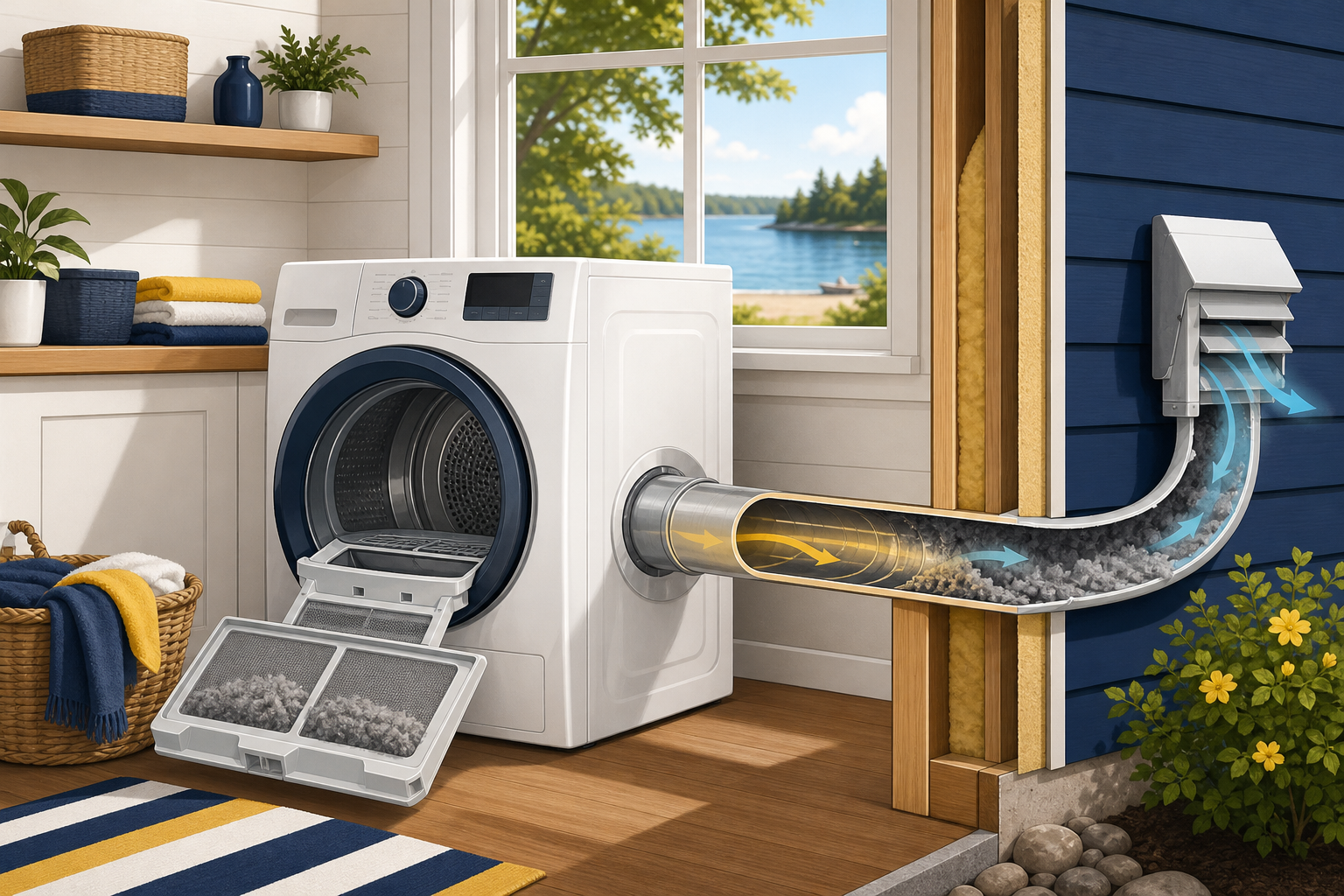
Dryer vent cleaning is worth investigating when clothes take longer to dry, the laundry area becomes unusually hot, or the outside exhaust hood has weak airflow. Start with the lint screen and visible vent path, but do not assume every drying problem is caused by lint. Overloading, a damaged hose, a blocked hood or an appliance fault can produce similar symptoms.
Natural Resources Canada identifies lint buildup in the exhaust duct and outside vent as a potential fire hazard. Health Canada also recommends cleaning the lint tray after every use, checking that the dryer vents outdoors, inspecting the outside vent and keeping it clear of snow and foliage. Ontario's Fire Code requires lint traps in laundry equipment to be cleaned often enough to prevent an undue fire hazard.
What dryer vent cleaning includes
Cleaning the lint screen is routine homeowner maintenance. A more complete inspection may include:
- Checking the lint screen for visible buildup or dryer-sheet residue.
- Inspecting the flexible hose behind the dryer for crushing, holes, sharp bends or disconnection.
- Checking the visible connection for gaps or lint escaping into the room.
- Removing accessible lint from the vent path and exterior termination, where the equipment and layout allow.
- Checking the outdoor hood for lint, leaves, nesting material, ice or snow.
- Looking for moisture, staining, unusual heat or damage around the laundry area.
The appropriate method depends on the dryer, the duct material, the length of the run and access to the termination. A long duct, several bends or a route through a finished wall may need a more careful assessment rather than a quick surface clean.
Six signs the vent path may need attention
1. Loads take longer to dry
Longer drying times can indicate restricted airflow, but they can also result from an overloaded drum, a heating problem or another appliance fault. Compare current performance with the dryer's normal operation and check the simple causes first.
2. Clothes or the laundry room feel unusually hot
Abnormal heat can occur when warm, moist air is not exhausting properly. Stop using the appliance if you notice smoke, scorching, a burning odour or abnormal noise. Arrange an appliance inspection before using it again.
3. The exterior flap barely opens
When the dryer is operating, the exterior termination should show evidence of exhaust airflow. Weak or intermittent airflow may point to lint, a crushed hose, a blocked hood or a duct problem.
4. Lint appears around the rear connection
Lint escaping behind the appliance may mean the hose is loose, damaged or not sealed properly. Move the dryer carefully; forcing it away from the wall can damage the connection or the duct.
5. The dryer displays an airflow warning
Some models monitor exhaust airflow and show a warning when restriction is detected. Treat the message as a reason to inspect the vent route and consult the owner's manual, not as a warning to reset repeatedly without finding the cause.
6. The outside hood is obstructed
Health Canada specifically advises keeping the outside exhaust vent clear of obstructions such as snow and foliage. Leaves, lint, ice and nesting material can reduce airflow, particularly at a seasonal property that is vacant between visits.
A practical homeowner checklist
- Clean the lint screen after every load. Remove visible lint and wash the screen occasionally if residue has accumulated, following the appliance manufacturer's instructions.
- Check the outside airflow. Look for a clear hood and evidence that exhaust is leaving the building.
- Inspect the visible hose. Look for crushing, sharp bends, holes and loose connections.
- Watch drying performance. Note whether towels, bedding or other heavy items are taking longer than usual.
- Look for moisture or staining. Damp lint, condensation or staining near the connection needs attention.
- Arrange deeper assessment when access is difficult. This is particularly relevant for long ducts, basement laundry rooms, stacked units or vents routed through walls or ceilings.
Turn the dryer off before inspecting or moving it, and follow the manufacturer's instructions. Do not improvise with a damaged hose, an unapproved extension or a vent that discharges into an enclosed space. Ontario building requirements address outdoor discharge and accessible, cleanable exhaust ducting; changes to a concealed or improperly installed vent should be assessed rather than guessed at.
Why seasonal cottages need a vent check
A cottage may sit vacant long enough for an exterior hood to collect leaves, snow or nesting material without anyone noticing. Include the dryer and its exterior termination in the spring condition check, especially after winter vacancy or building work near the vent.
Wasaga Beach Handyman's cottage opening service is a relevant place to ask about adding a visible vent and laundry-area check to a broader opening list. At closing, the cottage closing service can be discussed alongside other seasonal tasks. Confirm the exact scope before booking; a visible inspection is not the same as appliance diagnosis or concealed duct repair.
When a handyman is not the right first call
Contact an appliance technician if the dryer continues to overheat, fails to heat, makes unusual noises or displays repeated fault codes after the vent path is clear.
Do not operate the appliance if you find damaged wiring, melted plastic, scorching, smoke or a gas odour. For gas-related concerns, electrical work, concealed duct damage, major appliance faults or a vent that cannot be safely accessed, ask the appropriate qualified trade or appliance professional to assess the problem.
A handyman may be suitable for an accessible exterior hood, visible hose connection or related property-maintenance task, subject to the provider's confirmation of scope and qualifications. Wasaga Beach Handyman describes its broader property maintenance service as covering seasonal inspections, scheduled maintenance and minor repairs, but its live pages reviewed for this article do not clearly verify a dedicated dryer-vent-cleaning service.
What to include in an estimate request
- The dryer's location, such as a main-floor laundry room, basement or cottage utility room.
- Whether the dryer is electric or gas-powered.
- The approximate route to the exterior termination and whether it passes through a wall or ceiling.
- Photos of the rear connection and exterior hood, only where they can be taken safely.
- The symptoms observed, such as long drying times, weak airflow, moisture or an appliance warning.
- Any other seasonal maintenance tasks you want reviewed during the same visit.
To ask whether the work fits the company's current service scope, use the verified contact page or call 705-795-4009. Describe the vent layout and symptoms, and request confirmation of what will be inspected, what is excluded and whether an appliance, HVAC or other specialist should handle part of the job.
Sources: Natural Resources Canada appliance guidance; Health Canada moisture and mould guidance; Ontario Fire Code.