 Wasaga Beach Handyman Services
 › Blog › Who Can Repair Drywall Holes and Cracks in Wasaga Beach?
← All articlesWho Can Repair Drywall Holes and Cracks in Wasaga Beach?
Key takeaways
- Use a handyman for small, dry, stable, isolated wall damage; use a drywall specialist for large, ceiling, textured, recurring, or finish-sensitive repairs.
- Investigate water stains, dampness, mould-like growth, sagging ceilings, repeated cracks, and damage near wiring or plumbing before cosmetic drywall work begins.
- For accurate quotes, send measured photos, identify the surface finish and location, disclose any leak history, and specify whether painting is required.
- A complete drywall repair commonly requires backing, tape, several coats of compound, sanding, primer, and agreed-upon painting—not just filling the visible hole.
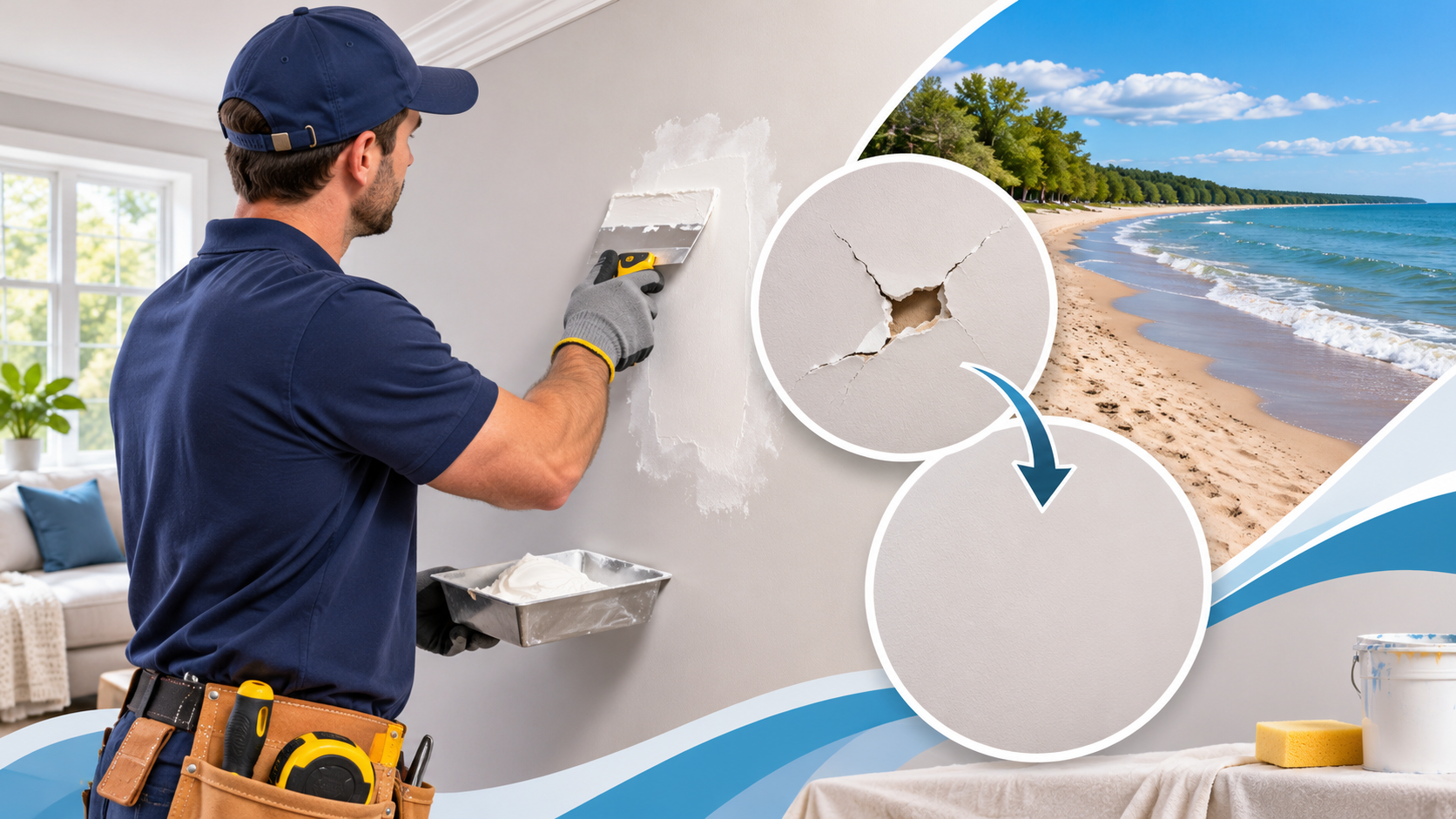
For small, dry, stable drywall damage in Wasaga Beach, a handyman is usually the right first call. Use a drywall specialist for large patches, ceiling damage, visible seams, texture matching, or recurring cracks. Stop and investigate leaks, mould, sagging, or electrical/plumbing concerns before anyone applies compound.
Choose the right drywall repair professional
The right person depends less on the hole itself than on its size, location, cause, and finish expectation. A small picture-hook hole in a bedroom wall is fundamentally different from a brown-stained ceiling crack below a bathroom.
Wasaga Beach Handyman Services lists drywall repair within its local home-repair offerings and can be a practical option for ordinary, isolated wall damage. For more complex work, engage a dedicated drywall contractor or the trade responsible for the cause of the damage.
| What you see | Best first call | Why |
|---|---|---|
| Nail holes, screw holes, shallow dents, small wall scuffs | Handyman | Usually involves filling, sanding, spot priming, and touch-up preparation |
| Door-knob puncture or hand-sized hole in a wall | Handyman or drywall specialist | May need backing, a drywall patch, tape, and multiple coats of compound |
| Long seam crack, multiple recurring cracks, or a cracked outside corner | Drywall specialist | Requires diagnosis of joint failure or movement and careful tape/finish work |
| Ceiling crack, ceiling hole, sagging board, or popped fasteners | Drywall specialist; investigate first if stained or sagging | Overhead repairs are more difficult and may indicate moisture or framing issues |
| Brown stain, damp drywall, musty smell, or mould-like growth | Plumber, roofer, restoration professional, or other source-related trade first | The moisture source must be controlled before drywall is closed |
| Damage beside an outlet, switch, plumbing line, or HVAC opening | Qualified electrician, plumber, or HVAC professional where applicable | A cosmetic patch must not conceal a building-system issue |
A practical Wasaga Beach drywall triage method
Before requesting quotes, use this four-part check. It is a useful way to describe damage consistently to a handyman, drywall specialist, landlord, or property manager.
1. Measure the damage
Use a tape measure and record the widest point of the hole or crack.
- Under 25 mm (1 inch): usually a fill-and-sand repair.
- 25 to 150 mm (1 to 6 inches): often needs a mesh patch, California patch, or small backing piece depending on the damage.
- Over 150 mm (6 inches): commonly requires a cut-out patch supported by wood or metal backing, taped seams, and several compound coats.
- Longer than 300 mm (12 inches): treat a crack as a possible seam, corner bead, or movement issue—not simply a paint defect.
These are scoping guidelines, not safety thresholds. A 10 mm crack can still need investigation if it is wet, widening, or next to electrical equipment.
2. Classify its location
Location changes the labour and the risk.
- Flat wall field: generally the simplest repair.
- Inside corner: needs flexible, straight finishing so the corner does not crack again.
- Outside corner: damaged metal, vinyl, or paper-faced corner bead may need replacement rather than filling.
- Ceiling: requires overhead access, dust control, and a finish that does not flash under side lighting.
- Above stairs or high walls: may require ladders, staging, or specialized access.
- Near a door frame: can indicate impact damage, loose trim, or repeated door contact that should be corrected first.
3. Check whether it is stable and dry
Press gently around the area. Sound drywall should feel firm, dry, and solid. Stop treating it as a standard patch job if it feels soft, swollen, crumbly, or cool and damp.
Health Canada advises addressing indoor mould and moisture problems promptly; mould growth is a reason to identify and correct the moisture source rather than painting or patching over the affected area (Health Canada: Mould in your home).
4. Decide how invisible the repair needs to be
A basement utility room and a sunlit living-room wall have different finish requirements. The more visible the location, the more valuable a drywall specialist’s finishing skill becomes.
A repair that is technically flat can still be noticeable after painting because of:
- raised patch edges or sanding scratches;
- missed texture or stipple patterns;
- a different paint sheen, especially eggshell or semi-gloss;
- “flashing,” where a patched area reflects light differently from the surrounding wall;
- faded existing paint that no longer matches the can stored in the garage.
For a highly visible wall, ask for a paint-ready Level 4-style finish: taped joints, multiple feathered coats, smooth sanding, and primer on the repaired area. Exact finish-level terminology should be confirmed with the contractor, especially if a textured finish is involved.
When a handyman is the best fit
A handyman is generally suitable for a contained repair where the drywall is dry, the framing appears stable, and there is no indication of an active leak or concealed-system hazard.
Typical handyman drywall tasks include:
- picture-hanger, nail, and screw holes;
- small dents from furniture moves;
- minor wall punctures caused by a door handle;
- stable hairline cracks in a single spot;
- small areas of damaged joint compound;
- patching before a move-out inspection, rental turnover, painting project, or home listing;
- combining drywall touch-ups with baseboard, trim, caulking, or minor painting work.
For example, a 50 mm door-knob hole in a hallway wall may require a backing piece, a drywall insert, joint tape, two or three coats of compound, sanding, primer, and paint touch-up. That is often within a handyman’s scope if the wall cavity is dry and there are no wires or pipes at risk.
Ask whether the quoted scope includes dust containment, disposal, primer, paint application, and furniture protection. “Drywall repair” may mean patch-and-sand only, while painting may be priced separately.
When to hire a drywall specialist
A specialist is the better choice when the repair is broad, overhead, repeated, textured, or located where every finishing flaw will show.
Choose a drywall contractor for:
- holes larger than roughly 150 mm (6 inches);
- multiple holes across one room or an entire rental unit;
- cracked seams that run horizontally or vertically along drywall joints;
- loose, bubbling, or damaged tape;
- ceiling cracks or holes;
- damaged textured ceilings, knockdown texture, orange-peel walls, or stipple finishes;
- cracks at several corners, doors, and windows;
- walls with strong natural light, glossy paint, or a large uninterrupted viewing area;
- repairs requiring replacement of corner bead or sizeable drywall sections.
A drywall professional is especially useful when a patch must disappear under critical lighting. In rooms with large windows facing Georgian Bay, low-angle morning or evening light can reveal poor feathering that is nearly invisible under standard ceiling fixtures.
For older homes, cottages, and seasonal properties, tell the contractor whether the property is heated year-round. Seasonal temperature and humidity changes do not automatically mean a crack is structural, but they are relevant context when cracks reappear at the same seams or corners.
Damage that should be investigated before repair
Do not let a cosmetic patch hide an active problem. Arrange an assessment first when you find any of the following:
- yellow, brown, or spreading water stains;
- a wet, soft, swollen, sagging, or crumbling drywall surface;
- mould-like growth or persistent musty odour;
- a ceiling that bows or has visible fastener pops in a concentrated area;
- a crack that reopens after previous repair;
- diagonal cracks extending from window or door corners;
- several new cracks in different rooms;
- damage beside a plumbing fixture, roof penetration, exterior wall, outlet, switch, or heating equipment.
For moisture-related damage, the sequence matters: stop the source, dry the assembly, remove unsalvageable material if necessary, then rebuild and finish. Covering a stain with compound and paint without resolving the leak often leads to a failed repair.
Where an electrical concern is possible, use a licensed electrical contractor rather than opening the wall blindly. Ontario’s electrical rules are administered through the Electrical Safety Authority, which also provides homeowner information about electrical safety and permits.
If the property is a rental, document the issue with dated photos and written notice. Ontario landlords have maintenance responsibilities, while tenants should report problems promptly; see the province’s overview of maintenance and repairs in rental housing.
What a complete drywall repair should include
A quality repair is more than spreading compound over a hole. The method varies, but a typical scope includes:
1. Protecting the room: covering floors, nearby furniture, and HVAC returns where practical.
2. Removing loose material: cutting back broken drywall, failed tape, or unstable compound.
3. Checking the cavity: looking for moisture, obvious obstructions, or damaged backing before closing the opening.
4. Installing support: adding wood backing, metal support clips, or appropriate patch material for larger openings.
5. Applying reinforcement: taping joints or cracks with suitable paper or fiberglass tape.
6. Building thin compound coats: allowing each coat to dry before the next coat is applied.
7. Feathering and sanding: extending the finish beyond the patch so there is no visible ridge.
8. Priming and painting: sealing the repaired surface before final paint, with paint blending or wall repainting as agreed.
Drying time is why even a modest patch may not be a one-visit project. Fast-setting compound can speed parts of the process, but paint should only be applied when the repaired surface is properly dry and prepared.
What to send when requesting a quote
A detailed request helps a provider decide whether the repair can be priced from photos or needs an on-site visit. Send:
- one straight-on photo and one angled photo with light raking across the surface;
- a ruler, tape measure, or coin beside the damage for scale;
- the room, wall, ceiling, corner, or stairwell location;
- whether the area is dry, stained, soft, or previously repaired;
- the surface finish: smooth paint, orange peel, knockdown, stipple, wallpaper, tile, or paneling;
- whether the repair is near plumbing, electrical, or a bathroom/kitchen;
- your desired result: patch only, paint-ready, colour-matched touch-up, or full-wall painting;
- access details, including tenant coordination, parking, pets, condo rules, cottage access, and working height.
Keep any leftover paint and label information available. Even with the correct colour code, old paint can change in appearance with age, cleaning, sunlight, and sheen differences. A contractor may recommend painting from corner to corner on the affected wall for the most consistent result.
Local property and rental considerations
Owners and landlords should not leave damaged interior finishes where they create deterioration, moisture, or safety concerns. The Town’s Property Standards By-law is a useful local reference for property-maintenance expectations.
For a straightforward repair, request a written scope that states the number and approximate size of patches, whether ceiling work is included, the finishing standard, paint responsibility, cleanup, and any exclusions for hidden water or electrical issues discovered after work begins.
FAQ
Who repairs a small hole in drywall in Wasaga Beach?
A handyman is usually suitable for a small, dry, isolated wall hole such as a picture-hanger hole, dent, or minor door-handle puncture. A drywall specialist is preferable if the surface is textured, highly visible, or requires an especially seamless finish.
Should a recurring drywall crack be repaired again?
Not until the likely cause is considered. A recurring crack may be a failed seam, seasonal movement, loose corner bead, moisture issue, or broader building movement. Photograph it, note whether it widens, and ask a drywall specialist to assess the repair method; investigate moisture or structural warning signs first.
Can water-damaged drywall be patched?
Only after the source of water has been stopped and the area has been properly assessed and dried. Soft, swollen, mouldy, or deteriorated drywall may need removal and replacement rather than patching.
Does drywall repair include paint matching?
Not always. Confirm whether the quote includes primer, supplying paint, colour matching, touch-up painting, or repainting the entire wall. A smooth patch can still look different if the existing paint has faded or has a different sheen.
Who is responsible for drywall damage in a rental?
Responsibility depends on the lease, the cause of damage, and Ontario tenancy rules. Tenants should report damage promptly and provide access as arranged; landlords are generally responsible for maintaining the rental unit. Keep dated photos and written communication for the repair record.
> Disclaimer: Service availability, qualifications, pricing, insurance, repair methods, and painting scope vary by provider. Confirm the current work scope, access requirements, warranty terms, cleanup plan, and responsibility for underlying moisture or building-system problems before authorizing work.
References
- https://wasagabeachhandyman.ca/service-areas/barrie
- https://wasagabeachhandyman.ca/about
- https://wasagabeachhandyman.ca/contact
- https://wasagabeachhandyman.ca/services/home-repair
- https://smoothfinishdrywallrepair.ca/services
- https://www.simcoehandyworks.ca
FAQ
Who repairs a small hole in drywall in Wasaga Beach?
A handyman is usually suitable for a small, dry, isolated wall hole such as a picture-hanger hole, dent, or minor door-handle puncture. Use a drywall specialist for textured, highly visible, ceiling, or larger repairs.
Should a recurring drywall crack be repaired again?
A recurring crack should be assessed before it is patched again. It can indicate a failed seam, movement, loose corner bead, or moisture issue. Investigate any widening, staining, sagging, or multiple new cracks.
Can water-damaged drywall be patched?
Only after the water source has been stopped and the area is dry and assessed. Soft, swollen, mouldy, or deteriorated drywall often needs removal and replacement rather than a surface patch.
Does drywall repair include paint matching?
Not necessarily. Confirm whether the quote includes primer, paint supply, colour matching, touch-up painting, or repainting the full wall. Existing paint age and sheen can make a spot repair visible.
Who is responsible for drywall damage in a rental?
Responsibility depends on the lease, cause of damage, and Ontario tenancy rules. Tenants should report damage promptly, while landlords are generally responsible for maintenance of the rental unit.